
The MACI Procedure
Knoxville’s Best Choice for The MACI Procedure in Eastern Tennessee

The MACI Procedure
Many common knee injuries are caused by wear and tear on the cartilage between the bones of the knee. Repetitive movements like running or impact-related damage from sports injuries can destroy your knees’ cartilage, leading to pain and a loss of range of motion.
Tennessee Orthopaedic Alliance Dr. Mike Casey uses the MACI Procedure for knee surgery to repair common knee injuries with the patient’s own cartilage with great success.
INNOVATIVE MACI PROCEDURE REPAIRS CARTILAGE WITH CARTILAGE
MACI – Matrix Associated Chondrocyte Implantation – helps patients recover their lost knee function and eliminate pain by using a patient’s own cartilage to grow new cartilage, which is used to repair the damaged knee.
Cartilage acts as a cushion between the bones, making sure joints move smoothly and without pain. When cartilage is damaged, joints may click, pop, hurt, and not move as they should.
Because cartilage cannot heal on its own, cartilage-based injuries will worsen over time if left untreated. If conservative treatments have not relieved your knee pain, you may be a candidate for MACI surgery.
HOW DOES THE MACI PROCEDURE WORK?
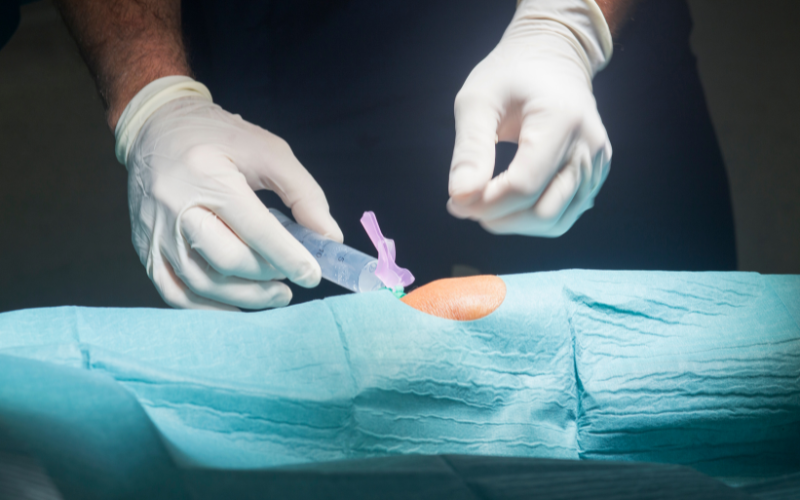
Once you and your surgeon determine you are candidate for MACI, a small biopsy will be taken from the cartilage in your knee.
The biopsied cartilage is sent to a lab where it will be used to grow new, healthy cartilage for 4-6 weeks. This new batch of bio-identical cartilage is called the MACI membrane.
Your surgeon will cut the MACI membrane to fit the area where your damaged cartilage was removed. The MACI membrane will be inserted and glued into place. Once placed, the new cartilage will adhere to the damaged area and fill in and repair the injured area. The film will dissolve away on its own.
REHABILITATION AFTER THE MACI PRCEDURE
Every MACI patient we treat follows a custom-created rehabilitation program, beginning the day of your surgery.
The following is a general timeline of what to expect after MACI surgery:
Week 1: Very limited, light weight-bearing movements on crutches
Weeks 2-3: Gradual increase of weight, flexibility, and mobility with crutches
Weeks 4-6 : Work toward full weight-bearing movements and full range of motion
Weeks 7-12: Full weight-bearing movement and range of motion without crutches
Months 3-6: Work toward full rehabilitation and strength building.
Months 6-9: Walk 3-4 miles without symptoms and return to low-impact recreational activities
Months 9-12: Return to normal, pre-surgery activity levels
Recent Articles
Knee Fracture Treatment in East Tennessee
Expert Knee Fracture Care at Tennessee Orthopaedic Alliance A knee fracture is a serious injury that can affect your ability to walk, bend your knee, and perform everyday activities. Because the...
ACL Surgery: What to Expect on the Day of Surgery
If you've scheduled ACL reconstruction surgery, it's natural to have questions about what will happen on the day of your procedure. Understanding the process can help you feel more prepared and...
The Role of Physical Therapy in Recovering from ACL Injuries
An anterior cruciate ligament (ACL) injury can be frustrating for athletes, active adults, and anyone who depends on strong knee stability for daily movement. Whether an ACL tear is treated with...
Knee Meniscus and ACL Surgery: What You Need to Know
A knee injury can make even simple activities like walking, climbing stairs, or exercising difficult. Two of the most common knee injuries involve the anterior cruciate ligament (ACL) and the...